
The fascination of using rare cine and still lenses on the Leica rangefinder

Since the birth of the Leica 100 years ago many great lenses have been created in Wetzlar for their mighty rangefinder system. From the classic rendition of a 5cm Elmar to the crisp perfection of a 50mm APO Summicron, there are many looks available in the big L's century of offerings. But what if you want something different? Something with characteristics you can't buy off the self? Well, let me show you the entrance to a rabbit hole you won't be able to stop yourself from poking your head into, even if you're a Leica lens purist.

Why convert a lens to M mount?
We all choose the Leica system because of the compact size, mechanical precision, discreteness and heritage. Choosing alternative lenses has a similarly attractive list of reasons:
Size
Cine lenses engineered for motion picture production are often similar in size to a typical Leica lens, especially C and D mount lenses for 16mm systems. Lenses from fixed lens still cameras, like the Nitto Kogaku 45mm f1.9 S Kominar pictured above, don't look out of place at all if converted tastefully.
Build quality/controls
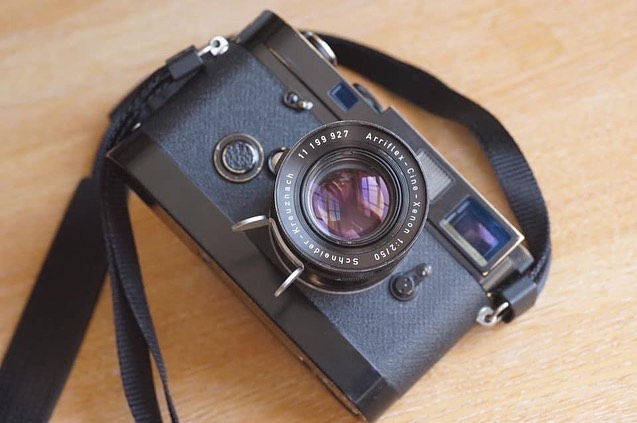
Cine lenses from expensive past cine systems like Arriflex, Camflex, Mitchell and Eclair were built to withstand extensive professional use, not just in terms of robustness but also ergonomics. For example The Arriflex-Cine-Xenon pictured below has a switch for clicked or clickless aperture selection and a fully closing aperture for fade in and outs. Of course, features not needed on your Leica, but undeniably cool and useful features for an SL or other video capable mirrorless camera with an adapter.
Unique Rendering and Colour
BOKEH: an overused word that makes many eye roll or cringe. It's not all about that out of focus goodness, but you're lying if you say you don't enjoy the mystical mushiness of wide open background foliage. Whilst it's not all about bokeh, it does play a big part of a lens's attractiveness, cine lenses are often fast and with this comes a myriad of different OOFs.
Heritage
The history of cinema is arguably larger than that of just Leica. You don't need to be a movie buff to know of the famous NASA commissioned 50mm f0.7 Carl Zeiss Planar lens Stanley Kubrick adapted the shoot candle lit scenes of Barry Lyndon. Whilst f0.7 isn't a great choice for a rangefinder adaption, lenses like the Cooke Speed Panchro series make amazing candidates for an M mount conversion providing a historic cinema aesthetic, such a desirable look Light Lens Labs have made a replica. But having an original lens that was used on unknown productions now providing you with cine-stills on your Leica is probably the main answer to the title of this blog.

How to choose a lens for conversion
When hunting for lenses to convert you need to take a few things into consideration. The image circle is a good place to start, many shorter focal length cine lenses struggle to cover 35mm full frame, especially lenses designed for smaller formats like 16mm. Most 2in/50mm and longer lenses from the last century cover 24x36 but it's not uncommon to only achieve 95% coverage. Offerings wider than 2in/50mm that cover FF become scarcer and optically more interesting, like the 1920 Bausch & Lomb 32mm Series Ic Tessar picture below that actually covers beyond full frame.

Don't disregard those shorter focal lengths that don't cover though, the M8 is a great rear cap for those 1inch wonders, or just crop.
Next on the list is to make sure the focus distance is equal to or greater than the Leica Ms 27.8mm. You can use lenses that have a shorter flange distance and sacrifice infinity focus, perfect if you just take wide open photos of your cappuccinos. Oh, and portraits too.
Finally the most exciting and important point is choosing a lens for it's unique optical characteristics. No rules here, it's completely subjective. If a lens warms your blood for it's insane flaring or it's compact size or it's centre sharpness, buy it and stick it on your Leica.
How to convert your Lens
Converting a lens to mount on your Leica first requires the flange distance to be set, this is usually done on the mount end. You can stop here for a cheap conversion, no rangefinder coupling, live view on digital bodies and scale focus on Film Ms. This is great for long lenses 4in/100mm+ or wide lenses 1.5in/35mm and lower. For the 150mm Cooke Kinetal below I just used an Arriflex to M adapter.

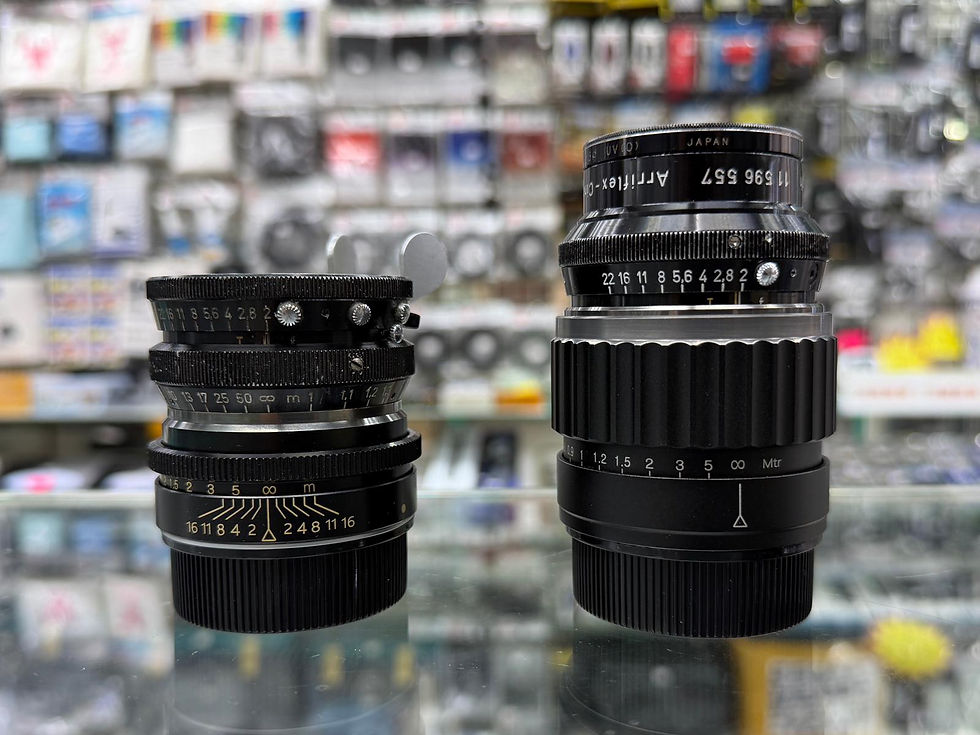
The next step is rangefinder coupling, a cam at the rear of the lens that interacts with the rangefinder arm of your Leica. These are by far the most useful and desirable conversions, mount the lens and focus as you would with a native M mount lens. This does take some thought, every lens is different and coming up with a solution for the coupling may need some ingenuity. My preferred option for 50mm and 75mm lenses are the all brass focus mounts with RF coupling from Yifeng, your lens head can be adapted to fit and the RF cam can be modified to suit. The 50mm and 75mm Arriflex Cine Xenons below have both been convert this way.
You can go one step further and have a custom mount and cam designed and machined. This is the most expensive and prettiest option, see this DP post about a custom mount adaption we arranged for a Som Bertiot 75mm f2.5 Tele Cinor, it looks OG. It can also allow for extra features such as RF coupling to .7 meters then closer, uncoupled focus like the current generation Leica lenses.
I have all my lenses converted in Hong Kong, if you'd like to have a lens converted give me a call or an email for a quote. Another option for conversions are Skyllaney Opto-Mechanics in Scotland, known for their high quality custom mounts.
The lasting appeal of unique lens conversions
If you've got this far you've put your head into the rabbit hole, I'm afraid there's no going back, jump in and look forward to hours of research into the world of alternative lenses and their abilities and who knows, maybe even procure a conversion you can't resist. I hope you do, and if you do, please share it with with us.
If you're interested in trying something different, come along to one of the UK camera fairs next year and have a look at what's on our table and try something for yourself. More blog content and interesting lens reviews will be following this blog, subscribe to be notified!


Comments